40  살아남은 패턴

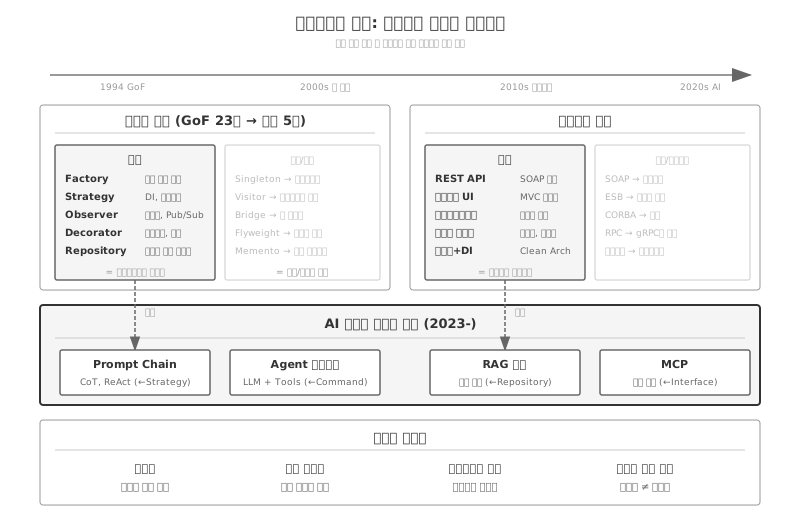
GoF가 1994년 23개 패턴을 정리한 이후 30년이 흘렀다. 그동안 어떤 패턴은 여전히 매일 쓰이고, 어떤 패턴은 잊혔다. 언어가 진화하면서 패턴 자체가 언어 기능으로 흡수되기도 했다. Iterator는 Python의 for 문과 제너레이터가 대신하고, Singleton은 모듈 수준 변수나 의존성 주입이 대체했다.

30년의 자연선택을 거쳐 살아남은 패턴은 무엇일까? 실무에서 반복적으로 마주치는 7개 패턴을 정리한다.

40.1 왜 7개만 남았나

그림 40.1: 살아남은 패턴

GoF 23개 패턴 중 실무에서 반복적으로 사용되는 패턴은 손에 꼽을 정도다. 나머지 패턴은 어디로 갔을까? 30년간의 자연선택을 분석하면 명확한 패턴이 보인다.

40.1.1 도태된 패턴과 그 이유

Iterator는 Python의 for/yield, Java의 for-each, JavaScript의 for...of에 흡수되었다. 언어 수준에서 제공되므로 별도 패턴 구현이 불필요해졌다.

Singleton은 전역 상태 문제로 안티패턴 취급을 받으며 의존성 주입(DI)으로 대체되었다. 테스트가 어렵고 숨겨진 의존성을 만들어 코드 이해를 방해한다.

Template Method는 고차 함수로 대체되었다. 상속 기반 구조보다 함수를 인자로 전달하는 방식이 더 유연하다.

Visitor는 패턴 매칭과 멀티디스패치로 대체되었다. Rust의 match, Python의 match-case가 더 간결한 해법을 제공한다.

Flyweight는 메모리가 저렴해지면서 필요성이 줄었다. 문자열 인터닝 같은 경우는 언어 런타임이 자동으로 처리한다.

40.1.2 생존 조건

살아남은 패턴에는 공통점이 있다.

언어에 흡수되지 않았다. Factory, Observer, Strategy는 언어 기능만으로 해결되지 않는 설계 결정을 담고 있다. “어떤 객체를 생성할 것인가”, “누구에게 통지할 것인가”, “어떤 알고리즘을 사용할 것인가”는 문법이 아니라 설계자가 결정해야 하는 문제다.

안티패턴으로 인식되지 않았다. Factory는 Singleton과 같은 생성 패턴이지만, 결합도를 낮추는 방향이라 여전히 권장된다. 전역 상태를 만들지 않고 테스트 가능한 코드를 유도한다.

함수형 프로그래밍과 공존한다. Strategy는 고차 함수로 간결하게 구현되고, Observer는 반응형 프로그래밍의 기초가 되었다. OOP 전용이 아니라 패러다임을 초월한 아이디어인 패턴이 살아남았다.

패턴 분류 핵심 아이디어 데이터 과학 적용
Factory 생성 객체 생성 로직 분리 모델 팩토리
Strategy 행위 알고리즘 교체 가능 알고리즘 선택기
Observer 행위 상태 변화 전파 실험 추적
Decorator 구조 동적 기능 추가 전처리 체인
Pipeline 함수형 변환 함수 연결 ML 파이프라인
Partial 함수형 인자 미리 고정 설정 주입
표 40.1: 살아남은 6개 패턴과 데이터 과학 적용

40.2 패턴이란 무엇인가

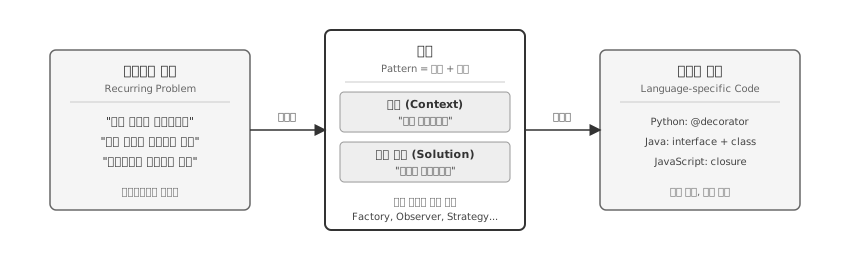
건축가 크리스토퍼 알렉산더(Christopher Alexander)는 패턴을 “특정 맥락에서 반복적으로 발생하는 문제에 대한 해법”이라고 정의했다 [1]. 핵심은 반복변형이다—문제는 반복되지만, 해법은 상황에 맞게 변형된다.

그림 40.2: 패턴의 정의

왼쪽에는 프로젝트마다 반복되는 문제들이 있다. “객체 생성이 복잡해졌다”, “상태 변화를 여러 곳에 전파해야 한다”, “알고리즘을 런타임에 교체해야 한다”. 가운데 패턴은 맥락(언제 적용하는가)과 핵심 해법(어떻게 해결하는가)의 쌍으로 문제를 추상화한다. 오른쪽에는 언어별 구현이 있다—같은 Factory라도 Python에서는 딕셔너리 레지스트리로, Java에서는 interface + class로, JavaScript에서는 클로저로 구현할 수 있다.

“같은 해법을 수백만 번 다시 사용할 수 있되, 매번 똑같이 적용하지는 않는다.” — 크리스토퍼 알렉산더

40.3 생성: Factory

40.3.1 문제

클라이언트 코드가 생성할 객체의 정확한 클래스를 미리 알 수 없거나, 여러 클래스 중 런타임에 선택해야 할 때 문제가 발생한다.

# 문제: 직접 생성 시 결합도 증가
class PDFExporter:
    def export(self, data):
        return f"[PDF] {data}"

class CSVExporter:
    def export(self, data):
        return f"[CSV] {data}"

class JSONExporter:
    def export(self, data):
        return f"[JSON] {data}"

# 클라이언트가 구체 클래스를 모두 알아야 함
def process_report(data, format_type):
    if format_type == "pdf":
        exporter = PDFExporter()
    elif format_type == "csv":
        exporter = CSVExporter()
    elif format_type == "json":
        exporter = JSONExporter()
    else:
        raise ValueError(f"지원하지 않는 형식: {format_type}")

    return exporter.export(data)

print(process_report("매출 보고서", "pdf"))
[PDF] 매출 보고서

process_report 함수가 모든 Exporter 클래스를 직접 알고 있다. XML 형식을 추가하려면 XMLExporter 클래스를 만들고, if-elif 체인도 수정해야 한다.

40.3.2 해법

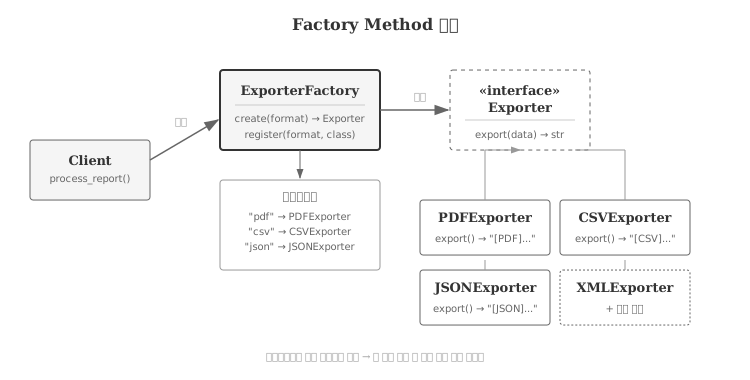
그림 40.3: Factory 구조

Factory 패턴은 객체 생성 책임을 분리한다. 클라이언트는 형식 문자열만 전달하고, Factory가 적절한 객체를 반환한다.

from abc import ABC, abstractmethod

# Product 인터페이스
class Exporter(ABC):
    @abstractmethod
    def export(self, data: str) -> str:
        pass

# ConcreteProduct들
class PDFExporter(Exporter):
    def export(self, data: str) -> str:
        return f"[PDF] {data}"

class CSVExporter(Exporter):
    def export(self, data: str) -> str:
        return f"[CSV] {data}"

class JSONExporter(Exporter):
    def export(self, data: str) -> str:
        return f"[JSON] {data}"

# Factory - 딕셔너리 레지스트리 방식
class ExporterFactory:
    _exporters = {
        "pdf": PDFExporter,
        "csv": CSVExporter,
        "json": JSONExporter,
    }

    @classmethod
    def create(cls, format_type: str) -> Exporter:
        exporter_class = cls._exporters.get(format_type)
        if exporter_class is None:
            supported = ", ".join(cls._exporters.keys())
            raise ValueError(f"'{format_type}'은(는) 지원하지 않습니다. 지원 형식: {supported}")
        return exporter_class()

    @classmethod
    def register(cls, format_type: str, exporter_class):
        cls._exporters[format_type] = exporter_class

# 클라이언트 코드 - 구체 클래스를 모름
def process_report(data: str, format_type: str) -> str:
    exporter = ExporterFactory.create(format_type)
    return exporter.export(data)

print(process_report("매출 보고서", "pdf"))
print(process_report("재고 현황", "csv"))
[PDF] 매출 보고서
[CSV] 재고 현황

40.3.3 확장

XML 형식을 추가해도 기존 코드를 수정하지 않는다. 새 클래스를 만들고 등록만 하면 된다.

# 새 형식 추가 - 기존 코드 수정 없음
class XMLExporter(Exporter):
    def export(self, data: str) -> str:
        return f"<data>{data}</data>"

ExporterFactory.register("xml", XMLExporter)
print(process_report("설정 파일", "xml"))
<data>설정 파일</data>

개방-폐쇄 원칙(OCP)이 적용되었다—확장에는 열려 있고, 수정에는 닫혀 있다.

40.3.4 함수형 대안

Python에서는 클래스 없이 함수와 딕셔너리만으로도 Factory를 구현할 수 있다.

# 함수형 Factory
EXPORTERS = {
    "pdf": lambda data: f"[PDF] {data}",
    "csv": lambda data: f"[CSV] {data}",
    "json": lambda data: f"[JSON] {data}",
}

def create_exporter(format_type):
    return EXPORTERS.get(format_type, lambda data: data)

exporter = create_exporter("pdf")
print(exporter("간단한 보고서"))
[PDF] 간단한 보고서

단순한 경우에는 함수형 접근이 더 간결하다. 객체 상태가 필요하면 클래스 기반 Factory가 적합하다.

40.4 행위: Strategy

40.4.1 문제

동일한 문제를 해결하는 여러 알고리즘이 있고, 런타임에 알고리즘을 교체해야 한다. 할인 계산, 정렬 방식, 압축 알고리즘, 인증 방식 등이 전형적인 예다.

# 문제: 조건문으로 알고리즘 선택
def calculate_discount(price, customer_type):
    if customer_type == "vip":
        return price * 0.8  # 20% 할인
    elif customer_type == "member":
        return price * 0.9  # 10% 할인
    elif customer_type == "new":
        return price * 0.95  # 5% 할인
    else:
        return price

print(calculate_discount(10000, "vip"))
8000.0

고객 유형이 추가될 때마다 elif가 늘어난다.

40.4.2 해법

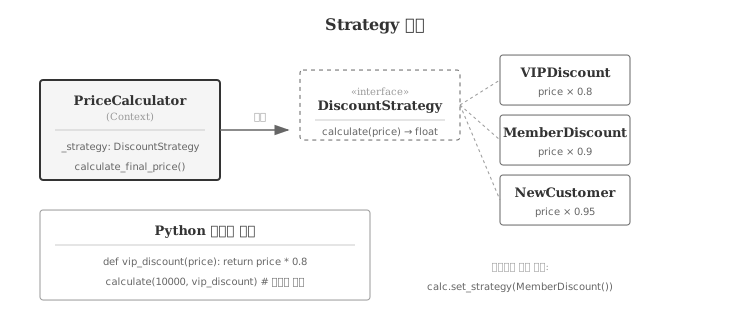
그림 40.4: Strategy 구조

Strategy 패턴은 각 알고리즘을 독립된 객체로 분리한다.

from abc import ABC, abstractmethod

# Strategy 인터페이스
class DiscountStrategy(ABC):
    @abstractmethod
    def calculate(self, price: float) -> float:
        pass

# ConcreteStrategy들
class VIPDiscount(DiscountStrategy):
    def calculate(self, price: float) -> float:
        return price * 0.8

class MemberDiscount(DiscountStrategy):
    def calculate(self, price: float) -> float:
        return price * 0.9

class NoDiscount(DiscountStrategy):
    def calculate(self, price: float) -> float:
        return price

# Context
class PriceCalculator:
    def __init__(self, strategy: DiscountStrategy):
        self._strategy = strategy

    def set_strategy(self, strategy: DiscountStrategy):
        self._strategy = strategy

    def calculate_final_price(self, price: float) -> float:
        return self._strategy.calculate(price)

# 사용
calculator = PriceCalculator(VIPDiscount())
print(f"VIP 가격: {calculator.calculate_final_price(10000)}원")

calculator.set_strategy(MemberDiscount())
print(f"회원 가격: {calculator.calculate_final_price(10000)}원")
VIP 가격: 8000.0원
회원 가격: 9000.0원

40.4.3 함수형 Strategy

Python에서는 함수가 일급 객체이므로, 함수를 전략으로 사용할 수 있다.

# 함수형 Strategy
def vip_discount(price):
    return price * 0.8

def member_discount(price):
    return price * 0.9

def no_discount(price):
    return price

DISCOUNT_STRATEGIES = {
    "vip": vip_discount,
    "member": member_discount,
    "normal": no_discount,
}

def get_final_price(price, customer_type):
    strategy = DISCOUNT_STRATEGIES.get(customer_type, no_discount)
    return strategy(price)

print(f"VIP: {get_final_price(10000, 'vip')}원")
print(f"회원: {get_final_price(10000, 'member')}원")
VIP: 8000.0원
회원: 9000.0원

5부 함수형 프로그래밍에서 배운 고차 함수가 Strategy 패턴의 함수형 구현이다.

40.5 행위: Observer

40.5.1 문제

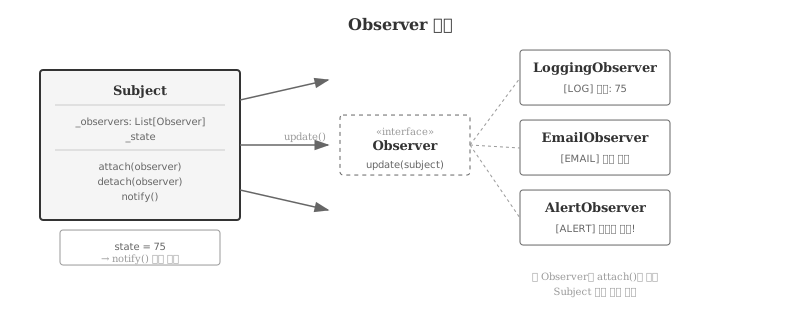
5부 반응형 프로그래밍에서 이미 Observer 패턴의 기초를 다뤘다. Observer 패턴은 객체 간 일대다 의존 관계를 정의한다. 하나의 객체(Subject)가 변경되면, 그에 의존하는 모든 객체(Observer)가 자동으로 통지받고 갱신된다.

40.5.2 해법

그림 40.5: Observer 구조
from abc import ABC, abstractmethod
from typing import List

# Observer 인터페이스
class Observer(ABC):
    @abstractmethod
    def update(self, subject: 'Subject') -> None:
        pass

# Subject
class Subject:
    def __init__(self):
        self._observers: List[Observer] = []
        self._state = None

    def attach(self, observer: Observer) -> None:
        if observer not in self._observers:
            self._observers.append(observer)

    def detach(self, observer: Observer) -> None:
        self._observers.remove(observer)

    def notify(self) -> None:
        for observer in self._observers:
            observer.update(self)

    @property
    def state(self):
        return self._state

    @state.setter
    def state(self, value):
        self._state = value
        self.notify()

# ConcreteObserver
class LoggingObserver(Observer):
    def update(self, subject: Subject) -> None:
        print(f"[LOG] 상태 변경: {subject.state}")

class AlertObserver(Observer):
    def __init__(self, threshold):
        self._threshold = threshold

    def update(self, subject: Subject) -> None:
        if isinstance(subject.state, (int, float)) and subject.state > self._threshold:
            print(f"[ALERT] 경고: 값 {subject.state}이(가) 임계값 초과!")

# 사용
subject = Subject()
subject.attach(LoggingObserver())
subject.attach(AlertObserver(threshold=50))

subject.state = 30
print()
subject.state = 75
[LOG] 상태 변경: 30

[LOG] 상태 변경: 75
[ALERT] 경고: 값 75이(가) 임계값 초과!

40.5.3 함수형 Observer

클래스 대신 함수를 콜백으로 등록할 수도 있다.

class EventEmitter:
    def __init__(self):
        self._listeners = {}

    def on(self, event: str, callback):
        if event not in self._listeners:
            self._listeners[event] = []
        self._listeners[event].append(callback)

    def emit(self, event: str, *args, **kwargs):
        if event in self._listeners:
            for callback in self._listeners[event]:
                callback(*args, **kwargs)

# 사용
emitter = EventEmitter()
emitter.on("data", lambda x: print(f"받은 데이터: {x}"))
emitter.on("error", lambda e: print(f"오류 발생: {e}"))

emitter.emit("data", "Hello, World!")
emitter.emit("error", "연결 실패")
받은 데이터: Hello, World!
오류 발생: 연결 실패

JavaScript의 EventEmitter, Node.js의 이벤트 시스템과 유사한 패턴이다.

40.6 구조: Decorator

40.6.1 문제

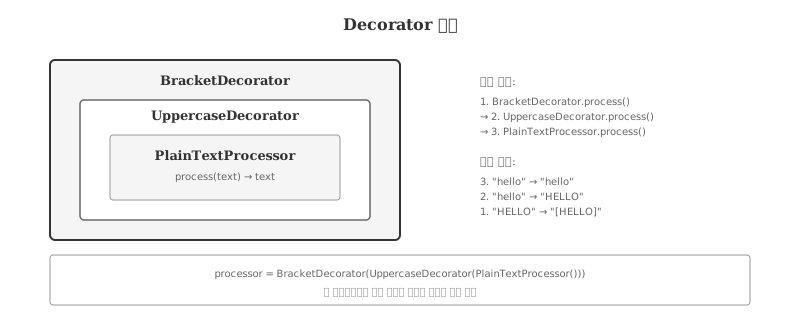
기존 객체의 기능을 동적으로 확장하고 싶을 때, 상속을 사용하면 클래스가 폭발한다. “로깅 기능이 있는 파일 읽기”와 “암호화 기능이 있는 파일 읽기”를 각각 만들면, “로깅과 암호화 모두”는 또 다른 클래스가 필요하다.

40.6.2 해법

그림 40.6: Decorator 구조

Decorator 패턴은 객체를 감싸서 새로운 기능을 추가하되, 원래 인터페이스는 그대로 유지한다.

from abc import ABC, abstractmethod

# Component 인터페이스
class TextProcessor(ABC):
    @abstractmethod
    def process(self, text: str) -> str:
        pass

# ConcreteComponent
class PlainTextProcessor(TextProcessor):
    def process(self, text: str) -> str:
        return text

# Decorator 기반 클래스
class TextDecorator(TextProcessor):
    def __init__(self, processor: TextProcessor):
        self._processor = processor

    def process(self, text: str) -> str:
        return self._processor.process(text)

# ConcreteDecorator들
class UppercaseDecorator(TextDecorator):
    def process(self, text: str) -> str:
        return super().process(text).upper()

class TrimDecorator(TextDecorator):
    def process(self, text: str) -> str:
        return super().process(text).strip()

class BracketDecorator(TextDecorator):
    def process(self, text: str) -> str:
        return f"[{super().process(text)}]"

# 자유롭게 조합
processor = PlainTextProcessor()
processor = TrimDecorator(processor)
processor = UppercaseDecorator(processor)
processor = BracketDecorator(processor)

print(processor.process("   hello world   "))
[HELLO WORLD]

40.6.3 Python decorator?

Python의 @decorator 문법은 GoF Decorator 패턴과 이름은 같지만 다른 개념이다. Python 데코레이터는 함수나 클래스를 감싸는 함수로, 메타프로그래밍 도구다. 그러나 “기존 동작에 새 동작을 추가”한다는 점에서 유사하다.

import time
from functools import wraps

def timing(func):
    """함수 실행 시간을 측정한다."""
    @wraps(func)
    def wrapper(*args, **kwargs):
        start = time.time()
        result = func(*args, **kwargs)
        elapsed = time.time() - start
        print(f"[TIMING] {func.__name__}: {elapsed:.4f}초")
        return result
    return wrapper

def retry(max_attempts=3):
    """실패 시 재시도하는 데코레이터"""
    def decorator(func):
        @wraps(func)
        def wrapper(*args, **kwargs):
            for attempt in range(1, max_attempts + 1):
                try:
                    return func(*args, **kwargs)
                except Exception as e:
                    print(f"[RETRY] 시도 {attempt}/{max_attempts} 실패: {e}")
                    if attempt == max_attempts:
                        raise
        return wrapper
    return decorator

@timing
@retry(max_attempts=2)
def fetch_data(url):
    time.sleep(0.1)
    return f"데이터 from {url}"

result = fetch_data("https://api.example.com")
print(result)
[TIMING] fetch_data: 0.1018초
데이터 from https://api.example.com

40.7 함수형: Pipeline

40.7.1 패턴 설명

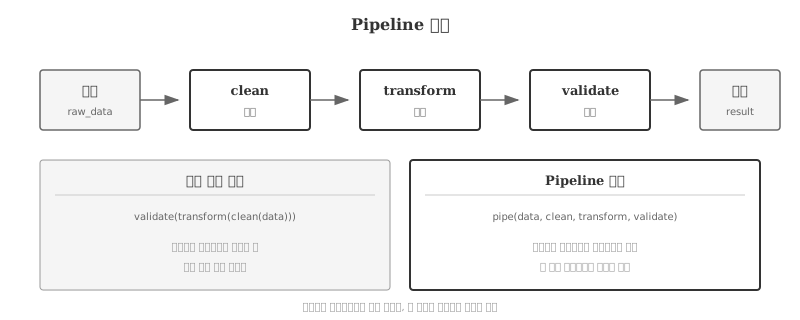
Pipeline 패턴은 데이터가 여러 함수를 순차적으로 통과하며 변환되는 구조다. Unix의 파이프(|)나 pandas의 메서드 체이닝이 대표적 예다.

40.7.2 Python 구현

from functools import reduce

def pipeline(*functions):
    """함수들을 파이프라인으로 연결한다."""
    def piped(data):
        return reduce(lambda x, f: f(x), functions, data)
    return piped

# 개별 변환 함수들
def strip_whitespace(text):
    return text.strip()

def to_lowercase(text):
    return text.lower()

def remove_punctuation(text):
    import string
    return text.translate(str.maketrans('', '', string.punctuation))

def split_words(text):
    return text.split()

# 파이프라인 구성
text_processor = pipeline(
    strip_whitespace,
    to_lowercase,
    remove_punctuation,
    split_words,
)

raw_text = "  Hello, World! This is a TEST.  "
print(text_processor(raw_text))
['hello', 'world', 'this', 'is', 'a', 'test']

pipeline(f, g, h)(x)h(g(f(x)))와 같다. 각 함수가 독립적이므로, 순서를 바꾸거나 새 단계를 추가하기 쉽다.

그림 40.7: Pipeline 구조

40.7.3 실전 예제: 데이터 전처리

def filter_valid(records):
    return [r for r in records if r.get("value") is not None]

def normalize_values(records):
    if not records:
        return records
    max_val = max(r["value"] for r in records)
    return [{**r, "value": r["value"] / max_val} for r in records]

def add_category(records):
    def categorize(val):
        if val >= 0.7: return "high"
        if val >= 0.3: return "medium"
        return "low"
    return [{**r, "category": categorize(r["value"])} for r in records]

data_pipeline = pipeline(filter_valid, normalize_values, add_category)

raw_data = [
    {"id": 1, "value": 100},
    {"id": 2, "value": None},
    {"id": 3, "value": 50},
]

for record in data_pipeline(raw_data):
    print(record)
{'id': 1, 'value': 1.0, 'category': 'high'}
{'id': 3, 'value': 0.5, 'category': 'medium'}

40.8 함수형: Partial Application

40.8.1 개념 설명

Partial Application은 함수의 일부 인자를 미리 고정하여 새 함수를 만드는 것이다. f(a, b, c)에서 a=1을 고정하면 g(b, c) = f(1, b, c)가 된다.

40.8.2 Python 구현

from functools import partial

def greet(greeting, name, punctuation):
    return f"{greeting}, {name}{punctuation}"

# Partial Application: greeting 고정
greet_hello = partial(greet, "안녕하세요")
greet_goodbye = partial(greet, "안녕히 가세요")

print(greet_hello("철수", "!"))
print(greet_goodbye("영희", "~"))

# 더 많은 인자 고정
greet_formal = partial(greet, "안녕하십니까", punctuation=".")
print(greet_formal("김 사장님"))
안녕하세요, 철수!
안녕히 가세요, 영희~
안녕하십니까, 김 사장님.

40.8.3 실전 예제: 설정 주입

Partial Application은 의존성 주입에 유용하다. 함수에 설정을 미리 주입하면 나중에 호출할 때 핵심 인자만 전달하면 된다.

def fetch_data(base_url, api_key, endpoint):
    return f"[{base_url}/{endpoint}] with key={api_key[:4]}..."

# 설정을 미리 주입
fetch_from_api_v1 = partial(
    fetch_data,
    base_url="https://api.v1.example.com",
    api_key="secret123456"
)

fetch_from_api_v2 = partial(
    fetch_data,
    base_url="https://api.v2.example.com",
    api_key="newsecret789"
)

# 사용 시에는 endpoint만 전달
print(fetch_from_api_v1(endpoint="users"))
print(fetch_from_api_v2(endpoint="products"))
[https://api.v1.example.com/users] with key=secr...
[https://api.v2.example.com/products] with key=news...

40.9 패턴 조합

실제 시스템에서는 여러 패턴이 함께 사용된다. Factory가 Strategy를 생성하고, Observer가 상태 변화를 전파하는 구조가 흔하다.

# Factory + Strategy + Observer 조합
class NotificationStrategy(ABC):
    @abstractmethod
    def send(self, message: str) -> None:
        pass

class EmailNotification(NotificationStrategy):
    def send(self, message: str) -> None:
        print(f"[EMAIL] {message}")

class SlackNotification(NotificationStrategy):
    def send(self, message: str) -> None:
        print(f"[SLACK] {message}")

# Factory
class NotificationFactory:
    _strategies = {
        "email": EmailNotification,
        "slack": SlackNotification,
    }

    @classmethod
    def create(cls, channel: str) -> NotificationStrategy:
        return cls._strategies.get(channel, EmailNotification)()

# Observer + Strategy
class OrderSystem(Subject):
    def __init__(self):
        super().__init__()
        self._notifiers = []

    def add_notifier(self, channel: str):
        notifier = NotificationFactory.create(channel)
        self._notifiers.append(notifier)

    def place_order(self, order_id: str):
        self.state = f"주문 {order_id} 접수됨"
        for notifier in self._notifiers:
            notifier.send(self.state)

# 사용
order_system = OrderSystem()
order_system.attach(LoggingObserver())
order_system.add_notifier("email")
order_system.add_notifier("slack")

order_system.place_order("ORD-12345")
[LOG] 상태 변경: 주문 ORD-12345 접수됨
[EMAIL] 주문 ORD-12345 접수됨
[SLACK] 주문 ORD-12345 접수됨

40.10 데이터 과학에서의 패턴 적용

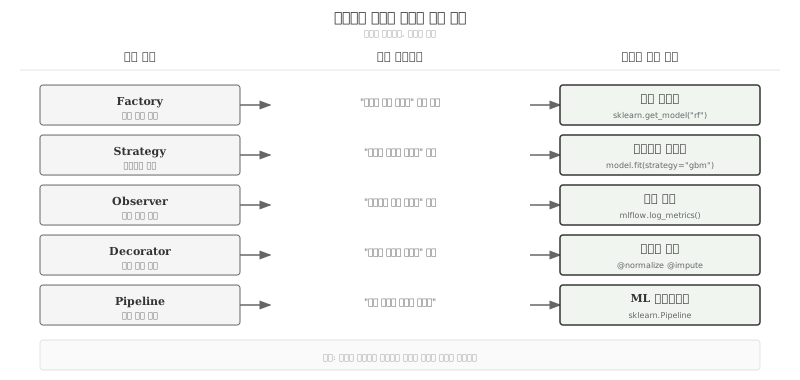
살아남은 패턴은 데이터 과학과 머신러닝 영역에서도 동일한 문제를 해결한다. 웹 개발에서 검증된 패턴이 ML 파이프라인에서 어떻게 적용되는지 살펴본다.

그림 40.8: 데이터 과학 패턴 적용

40.10.1 Factory → 모델 팩토리

scikit-learn의 모델 선택은 Factory 패턴의 전형적인 적용 사례다. 클라이언트 코드가 구체적인 모델 클래스를 알 필요 없이, 문자열로 모델을 요청하면 팩토리가 적절한 객체를 반환한다.

# 데이터 과학에서의 Factory 패턴
def create_model(model_type: str, **params):
    """모델 타입에 따라 적절한 모델을 생성한다."""
    models = {
        "rf": lambda: {"name": "RandomForest", "params": params},
        "gbm": lambda: {"name": "GradientBoosting", "params": params},
        "svm": lambda: {"name": "SVM", "params": params},
    }
    creator = models.get(model_type)
    if creator is None:
        raise ValueError(f"지원하지 않는 모델: {model_type}")
    return creator()

# 설정 파일에서 모델 타입만 읽어서 생성
config = {"model_type": "rf", "n_estimators": 100}
model = create_model(config["model_type"], n_estimators=config.get("n_estimators", 50))
print(f"생성된 모델: {model}")
생성된 모델: {'name': 'RandomForest', 'params': {'n_estimators': 100}}

AutoML 도구들(Auto-sklearn, FLAML)은 이 패턴을 확장하여 모델 선택 자체를 자동화한다.

40.10.2 Strategy → 알고리즘 선택기

하이퍼파라미터 튜닝에서 탐색 전략(Grid Search, Random Search, Bayesian Optimization)을 교체하는 것이 Strategy 패턴이다.

# 탐색 전략을 교체 가능하게 구성
def grid_search(param_grid):
    return f"Grid Search: {len(param_grid)} combinations"

def random_search(param_grid, n_iter=10):
    return f"Random Search: {n_iter} samples"

def bayesian_search(param_grid, n_trials=20):
    return f"Bayesian Optimization: {n_trials} trials"

# 전략 선택
SEARCH_STRATEGIES = {
    "grid": grid_search,
    "random": random_search,
    "bayesian": bayesian_search,
}

def tune_model(param_grid, strategy="random", **kwargs):
    search_fn = SEARCH_STRATEGIES.get(strategy, random_search)
    return search_fn(param_grid, **kwargs)

params = {"learning_rate": [0.01, 0.1], "max_depth": [3, 5, 7]}
print(tune_model(params, strategy="grid"))
print(tune_model(params, strategy="bayesian", n_trials=30))
Grid Search: 2 combinations
Bayesian Optimization: 30 trials

40.10.3 Observer → 실험 추적

MLflow, Weights & Biases 같은 실험 추적 도구는 Observer 패턴을 구현한다. 학습 중 메트릭이 변경될 때마다 여러 Observer(로깅, 시각화, 알림)가 자동으로 통지받는다.

# 실험 추적 시스템의 Observer 패턴
class ExperimentTracker:
    def __init__(self):
        self._observers = []

    def add_observer(self, observer):
        self._observers.append(observer)

    def log_metric(self, name: str, value: float, step: int):
        for observer in self._observers:
            observer(name, value, step)

# Observer 함수들
def console_logger(name, value, step):
    print(f"[Step {step}] {name}: {value:.4f}")

def alert_on_nan(name, value, step):
    if value != value:  # NaN 체크
        print(f"[ALERT] NaN detected in {name} at step {step}")

# 학습 루프에서 사용
tracker = ExperimentTracker()
tracker.add_observer(console_logger)
tracker.add_observer(alert_on_nan)

# 학습 중 메트릭 기록
for epoch in range(3):
    tracker.log_metric("loss", 0.5 - epoch * 0.1, epoch)
[Step 0] loss: 0.5000
[Step 1] loss: 0.4000
[Step 2] loss: 0.3000

40.10.4 Pipeline → ML 파이프라인

scikit-learn의 Pipeline은 함수형 Pipeline 패턴의 데이터 과학 버전이다. 전처리, 피처 엔지니어링, 모델 학습을 하나의 파이프라인으로 구성한다.

from functools import reduce

# ML 파이프라인의 단순화된 구현
def make_pipeline(*steps):
    """sklearn.Pipeline의 간소화 버전"""
    def pipeline(X):
        return reduce(lambda data, step: step(data), steps, X)
    return pipeline

# 전처리 단계들
def fill_missing(data):
    return [0 if x is None else x for x in data]

def scale(data):
    max_val = max(data) if data else 1
    return [x / max_val for x in data]

def to_features(data):
    return {"features": data, "n_samples": len(data)}

# 파이프라인 구성
preprocessing = make_pipeline(fill_missing, scale, to_features)

raw_data = [100, None, 50, 200]
result = preprocessing(raw_data)
print(result)
{'features': [0.5, 0.0, 0.25, 1.0], 'n_samples': 4}

실제 프로젝트에서는 sklearn.pipeline.Pipeline, Prefect, Airflow 같은 도구가 이 패턴을 제공한다.

40.11 안티패턴

패턴을 과도하게 적용하면 오히려 문제가 된다.

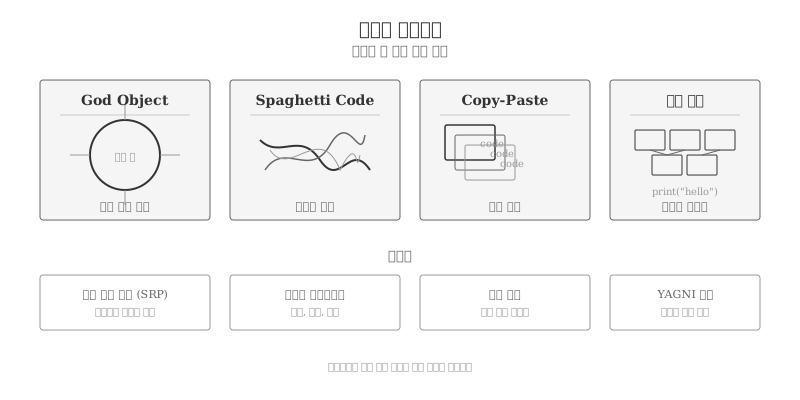
그림 40.9: 안티패턴

God Object: 하나의 클래스가 너무 많은 책임을 진다. 수천 줄짜리 Manager 클래스가 전형적인 예다.

패턴 만능주의: 단순한 문제에 복잡한 패턴을 적용한다. 설정 파일 하나 읽는 데 Factory + Builder + Strategy를 동원할 필요는 없다.

Spaghetti Code: 구조 없이 코드가 얽혀 있다. 패턴은 이를 방지하지만, 과도한 추상화는 다른 형태의 복잡성을 만든다.

경고YAGNI - You Aren’t Gonna Need It

패턴을 적용하기 전에 자문하라: “정말 필요한가?” 미래의 확장성을 위해 지금 복잡성을 추가하는 것은 대부분 낭비다. 현재 문제를 가장 단순하게 해결하고, 나중에 필요하면 리팩토링하라.

40.12 디버깅

40.12.1 Factory 디버깅

Factory에서 자주 발생하는 오류는 등록되지 않은 타입 요청이다.

try:
    exporter = ExporterFactory.create("excel")
except ValueError as e:
    print(f"오류: {e}")
오류: 'excel'은(는) 지원하지 않습니다. 지원 형식: pdf, csv, json, xml

지원 형식 목록을 제공하고, 명확한 에러 메시지로 안내한다.

40.12.2 Observer 디버깅

Observer에서 자주 발생하는 문제:

  1. 순환 통지: A가 B를 통지하고, B가 다시 A를 통지하여 무한 루프
  2. 메모리 누수: Observer를 해제하지 않아 메모리에 남음
  3. 순서 의존성: Observer 호출 순서에 의존하는 로직

40.12.3 Pipeline 디버깅

파이프라인에서 어느 단계에서 문제가 발생했는지 파악하기 어려울 수 있다. 로깅 래퍼를 사용하면 각 단계를 추적할 수 있다.

def debug_step(name):
    def decorator(func):
        def wrapper(data):
            print(f"[{name}] 입력: {str(data)[:30]}...")
            result = func(data)
            print(f"[{name}] 출력: {str(result)[:30]}...")
            return result
        return wrapper
    return decorator

@debug_step("1. Strip")
def debug_strip(text):
    return text.strip()

@debug_step("2. Lower")
def debug_lower(text):
    return text.lower()

debug_pipeline = pipeline(debug_strip, debug_lower)
debug_pipeline("  Hello World!  ")
[1. Strip] 입력:   Hello World!  ...
[1. Strip] 출력: Hello World!...
[2. Lower] 입력: Hello World!...
[2. Lower] 출력: hello world!...
'hello world!'

💡 생각해볼 점

40.12.4 패턴의 본질

살아남은 패턴의 공통점은 패러다임을 초월한 아이디어라는 점이다. Factory는 OOP에서 딕셔너리 레지스트리로, Strategy는 고차 함수로, Observer는 이벤트 이미터로 구현할 수 있다. 언어와 패러다임이 바뀌어도 핵심 문제와 해법은 동일하다.

패턴 핵심 질문 전통 구현 데이터 과학 구현
Factory 무엇을 만들 것인가? 딕셔너리 레지스트리 모델 팩토리
Strategy 어떻게 처리할 것인가? 함수 전달 알고리즘 선택기
Observer 누구에게 알릴 것인가? 이벤트 이미터 실험 추적
Decorator 무엇을 추가할 것인가? decorator? 전처리 체인
Pipeline 어떤 순서로? reduce + 함수 sklearn.Pipeline
표 40.2: 패턴의 핵심 질문과 구현

40.12.5 패턴 적용 기준

패턴을 적용할지 결정할 때 세 가지를 자문하라.

  1. 이 문제가 반복되는가? 한 번만 발생하는 문제에 패턴을 적용하면 과잉 설계다.
  2. 해법을 분리하면 유연성이 생기는가? 분리해도 변경 가능성이 없다면 복잡성만 증가한다.
  3. 지금 당장 필요한가? 미래의 확장성을 위해 현재 복잡성을 추가하는 것은 대부분 낭비다.

세 질문 모두에 “예”일 때만 패턴을 적용하라. YAGNI(You Aren’t Gonna Need It) 원칙을 기억하자.

40.12.6 데이터 과학에서의 패턴

앞서 살펴본 것처럼, 살아남은 패턴은 데이터 과학 프로젝트에서도 동일한 문제를 해결한다. scikit-learn의 Pipeline은 함수형 Pipeline 패턴이고, MLflow의 실험 추적은 Observer 패턴이다. 웹 개발과 ML 엔지니어링이 다른 도메인처럼 보이지만, 설계 문제의 본질은 같다.

차이점은 불확실성의 수준이다. 웹 개발에서 Factory가 생성하는 객체는 결정적(deterministic)이지만, ML에서 모델 팩토리가 생성하는 모델은 확률적(probabilistic)이다. Strategy 패턴으로 교체하는 알고리즘이 명시적 규칙이 아니라 학습된 모델이라는 점이 다르다.

40.12.7 패턴만으로 해결할 수 없는 문제

전통적인 패턴에는 근본적인 한계가 있다. 모든 패턴은 개발자가 규칙을 명시적으로 작성한다는 전제 위에 서 있다. Strategy 패턴으로 알고리즘을 교체하려면 가능한 알고리즘을 미리 정의해야 하고, Factory 패턴으로 객체를 생성하려면 모든 케이스를 분기해야 한다.

문제는 모든 경우를 규칙으로 표현할 수 없다는 점이다. 고양이 사진인지 개 사진인지 구분하는 규칙을 if-else로 작성할 수 있는가? 자연어 질문에 적절한 답변을 생성하는 규칙을 명시할 수 있는가? 이러한 문제는 규칙 기반 패러다임—Software 1.0—의 영역을 넘어선다.

다음 파트에서는 규칙 대신 데이터에서 패턴을 학습하는 새로운 패러다임을 다룬다. 기계학습은 개발자가 규칙을 작성하는 대신 데이터와 모델이 규칙을 도출한다. 이것이 Software 2.0이며, 전통적인 디자인 패턴과는 완전히 다른 사고방식을 요구한다. 그러나 Factory, Strategy, Observer, Pipeline 같은 구조적 패턴은 ML 시스템에서도 여전히 유효하다—다만 그 안에 담기는 내용이 명시적 규칙에서 학습된 모델로 바뀔 뿐이다.